Health Benefits

MUSHROOMS!
Lion's Mane
Lion's Mane
Edible and medicinal mushrooms are rich sources of bioactive substances, including polysaccharides, alkaloids, steroids, polyphenols, and lipids. Among these, edible and medicinal mushroom polysaccharides (EMMPs) have exhibited great nutritional and healing properties. The most common polysaccharide extracted from both edible and medicin
Edible and medicinal mushrooms are rich sources of bioactive substances, including polysaccharides, alkaloids, steroids, polyphenols, and lipids. Among these, edible and medicinal mushroom polysaccharides (EMMPs) have exhibited great nutritional and healing properties. The most common polysaccharide extracted from both edible and medicinal mushrooms is β-glucan, although the structures, concentration, and complexity may differ. Over the past few decades, extensive research has highlighted the diverse health-promoting activities of EMMPs, including antiobesity, anticancer, antioxidant, anti-inflammation and antidiabetes activity and modulation of lipid metabolism. In recent years, it has been discovered that EMMPs could improve GI health in many ways. On one hand, intestinal microbiota could ferment and utilize EMMPs. On the other hand, EMMPs could modulate immune system cells such as T and B lymphocytes, macrophages, and dendritic cells (DCs) to initiate immune responses in the host. Recently, polysaccharides, particularly EMMPs, together with probiotics have been used as a combination to treat various intestinal and colorectal related diseases.

Lion's Mane
Lion's Mane
Lion's Mane
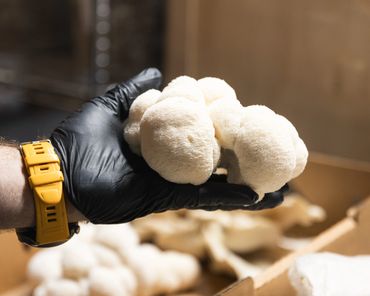
Lion's Mane has a long history of use in Native American as well as East Asian medical systems for infections, anxiety, stress, and depression. Limited clinical data suggest lion’s mane may improve memory and mood in overweight individuals, mild cognitive impairment, cognitive function in older adults and in patients with mild Alzheimer’
Lion's Mane has a long history of use in Native American as well as East Asian medical systems for infections, anxiety, stress, and depression. Limited clinical data suggest lion’s mane may improve memory and mood in overweight individuals, mild cognitive impairment, cognitive function in older adults and in patients with mild Alzheimer’s disease, as well as mood in menopausal women. Subjective reductions in stress were also reported in younger adults although supplementation had no impact on metabolic flexibility or cognition.
In addition, lion’s mane demonstrated antiproliferative and antimetastatic activities in preclinical models. But there are no studies in humans that show it has anti-cancer effects.
https://www.mskcc.org/cancer-care/integrative-medicine/herbs/lions-mane-mushroom

Shiitake
Shiitake
Shiitake
In recent years, Shiitake has attracted attention due to their antioxidant, anti-inflammation, antimicrobial, immunomodulatory and other properties. Controlled human intervention studies demonstrate that consumption of whole, dried Lentinula edodes (5–10 g/day) enhances innate and mucosal immune function by increasing γδ-T and NK-T cell
In recent years, Shiitake has attracted attention due to their antioxidant, anti-inflammation, antimicrobial, immunomodulatory and other properties. Controlled human intervention studies demonstrate that consumption of whole, dried Lentinula edodes (5–10 g/day) enhances innate and mucosal immune function by increasing γδ-T and NK-T cell proliferation and activation, elevating salivary sIgA, and modulating cytokine profiles toward a less inflammatory state.
They are a nutritionally good source of proteins, carbohydrates, lipids, vitamins, organic and inorganic acids, and various kinds of sugar, glucans, and minerals. They are known for being an abundant source of protein, providing amounts comparable to milk and surpassing those found in rice and wheat. They are rich in minerals, including selenium, calcium, magnesium, iron, zinc, manganese, phosphorus, copper, and sodium. These minerals are essential in biosynthesis, cell metabolism, and human physiological function.
https://link.springer.com/article/10.1007/s44187-026-00937-6

Oyster
Shiitake
Shiitake
A randomised controlled study to investigate the cognitive, mood, metabolic and anti-inflammatory effects of chronic oyster mushroom intervention in healthy older adults. This study investigated cognition, mood, and inflammation in 80 healthy adults, aged 60-80, after consuming four portions per week of either oyster mushroom or placebo
A randomised controlled study to investigate the cognitive, mood, metabolic and anti-inflammatory effects of chronic oyster mushroom intervention in healthy older adults. This study investigated cognition, mood, and inflammation in 80 healthy adults, aged 60-80, after consuming four portions per week of either oyster mushroom or placebo for 12 weeks. Results showed that the placebo group at 12 weeks showed decreased cognitive performance and increases in negative mood (i.e., more fear, sadness, shyness, and anxiety) compared to baseline. Conversely, participants in the mushroom group had improved memory, less anxiety, and reduced inflammation after 12 weeks, compared to baseline. At 12 weeks, the mushroom group showed increased memory performance and less negative mood than the placebo group. Overall, the group eating the oyster mushrooms maintained their mood and memory compared to placebo, alongside reducing markers of inflammation.
https://www.ars.usda.gov/research/publications/publication/?seqNo115=426737
Explore our farm photo gallery